Funny Girl

I read a lot of Nick Hornby growing up. I sped through High Fidelity, About A Boy, and many more in my late teens, from which I have a very clear memory of a pretty girl who studied at a better university than me and smoked cigarettes laughing at my preferences and telling me to read Kafka instead. When I saw Funny Girl in a local charity shop, then, I thought it was a good chance to see how far my tastes have matured in the last decade.

One thing’s for sure: Hornby can still write a book I can’t put down. Published four years ago, Funny Girl tracks the life of a Blackpool woman who moves to London to pursue a career in television acting. From there, the writers, producer, and other actors on her big-break television programme enter the story, and the bulk of the book is an ensemble effort with all kinds of plot threads progressing simultaneously on everything from gay rights to the north-south divide, all tied together by Hornby’s trademark sharp dialogue.

The half-bottle of whisky alone already makes this photo darker than any part of Funny Girl.

But while this was enough to keep the pages turning, as I reached the end I couldn’t help but think it was all a bit easy. Main character Sophie moves to London and finds a sketchy agent – but she lands her dream job by herself and pretty much lives happily ever after. Relationships end – amicably. Characters take risks with their careers – and they pay off. I never felt that there was anything at stake once the first episode of Sophie’s sitcom proved a hit, and even if there had been, the show’s team were too tight-knit a group for it to matter. Even internal affairs and cheating had no noticeable effect on their dynamic.

Maybe it’s just a sign of where I’m at when it comes to reading. An entertaining story might have been enough to keep me going in 2008 (or as some light relief after the heavy, philosophical 12 Rules for Life), but I’ve read too many novels since that have left me with that “wow” feeling as I turned the final page, having offered a new perspective on the world and given me some thinking to do beyond the surface-level plot. Funny Girl had none of that, but was so fast-paced and well-written that I flew through its pages anyway.

12 Rules for Life

One of my colleagues who read 12 Rules for Life said it was “basically 300 pages of common sense”. Some of my friends refused to touch the book because of the reputation of its author, Jordan B Peterson. So how did this philosophical self-help guide sell millions of copies around the world? Being inquisitive, I decided to reserve judgement until I’d read it myself, and given everything I’d heard prior about 12 Rules, I was pleasantly surprised by the time I reached the end (very quickly, too, it must be said).

If you just read the titles of the chapters (each is one of the titular rules), you’d either be very confused or think my colleague was right. But behind statements like “be precise in your speech” and “tell the truth – or at least don’t lie” are essays exploring the Bible, philosophy, and Peterson’s own experiences as a psychologist and a human. I won’t be following the rules like commandments, but as I read the book I could feel it unravelling long-held thoughts and convictions and helping me make sense of my own behaviours.

There are no free photos of living lobsters. These guys obviously didn’t stand up straight with their shoulders back!

The lessons of 12 Rules are all grounded in near universally-held logic and beliefs: get your own estate in order before criticising others, act confident to become confident, take time to enjoy life’s small pleasures, focus on self-improvement rather than envying others’ achievements, and so on. The difference is that Peterson is able to hold a psychological lens to these mantras, explaining why certain behaviours are intrinsic to our species and how to become more concscious of and alter your own to positive effect.

While I don’t believe the book has anything but good intentions, I can see how some short passages could conflict with some people’s political and ethical beliefs (including my own in some cases). But I would urge anyone putting off reading 12 Rules for this reason to push past it. After all, we have the cognitive function to criticise the things we hear, and you don’t have to agree or disagree with 100 percent of what an author says. Peterson’s political arguments won’t sway non-believers, but I dare say it would be a hard task to read this book and find nothing of personal value in his psychological musings.

I, Robot – Reason

I’m making an effort to get around to films, books, and music I’ve always meant to try, but have never made the time for. Next in line is science fiction writer Isaac Asimov, whose collection of short stories I, Robot was sitting on the shelf of a local charity shop. It took me a while to get to grips with his style, but now I’m nearing the end I’m gripped.

A story that surprised me was Reason – one that moves beyond science fiction to allude to arguments around philosophy, religion, free will, and the meaning of life. It centres around a test of the robot Cutie, designed to run a space station, who refuses to obey human commands and is subservient only to what it calls “The Master”. It converts the outpost’s entire robotic crew to its ideology, and essentially holds the humans hostage.

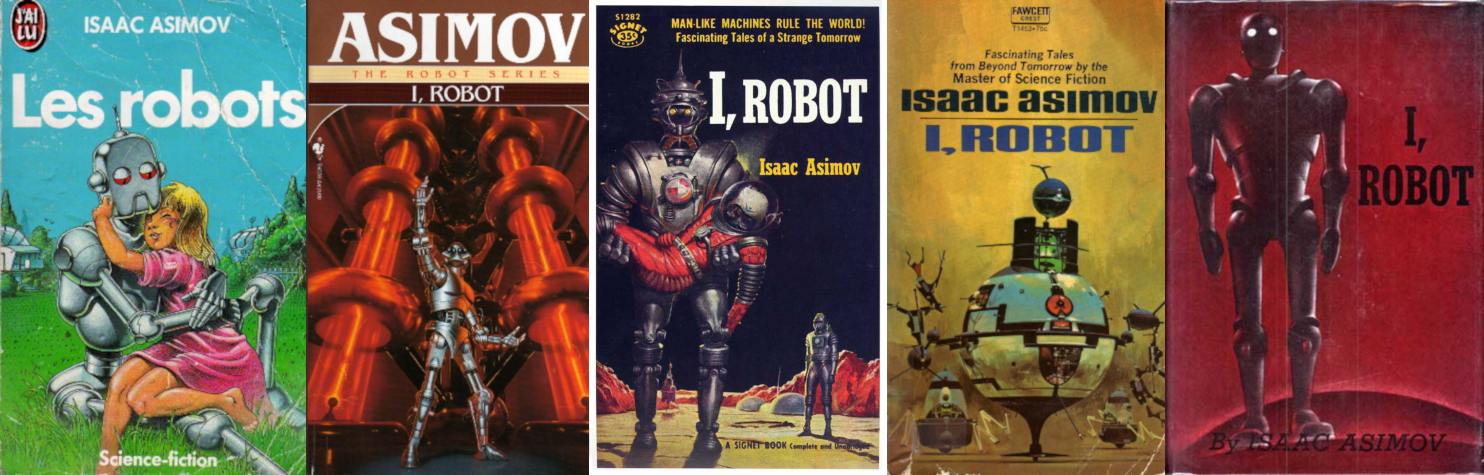
I, Robot covers – all of them cooler than the one I have

But by the end, Cutie’s operators realise that there’s no point in reeducating the robot. While they have been held captive, the station has been run perfectly well – they reason that Cutie was following the second law of robotics, knowing that humans would come to harm if it wasn’t. They even reason that future robots should spend time with Cutie to learn to serve The Master before they are deployed elsewhere.

There’s more to the story than this (go and read it!), but it raises many interesting questions. How can we be sure of our origins? Are our motivations really our own, or are our actions part of a bigger plan? And do our intentions matter, or is it purely our outcomes and their impact that we should be concerned with? Asimov’s work has made me want to pick up the philosophy classics I studied as a teenager again…