Nagoya, Aichi, Japan

Like my trip to Las Vegas, my recent time in Japan had three distinct parts: a city break in Nagoya, the Formula 1 Japanese Grand Prix, and a beach holiday in Okinawa. I’ll address each in a separate blog post over the coming weeks, beginning with the three days I spent amusing myself in the city.

So there I was, with three empty days before the Grand Prix to fill in a place the internet called “the most boring city in Japan”. I’d been to Nagoya before and seen the castle, so I needed to find things to do beyond the obvious (for the sake of brevity, I’ll also avoid rambling about my love for small but cool Japanese things like subway etiquette). Luckily, I’d done some research before leaving home, and had some actvities planned…

On Day One I decided to take a relaxed stroll and indulge my nerdy side. It’s no Akihabara, but in Nagoya’s Osu shopping district (and beyond) there are some video game shops that far exceed anything we have in the UK – Super Potato and Meikoya, for a start, along with games sections in bigger second-hand stores like Hard-Off. I made my way around these, stopping in the large department stores and Hisaya-Odori Garden in between, and after some consideration bought a Japanese copy of the Dead Rising PS4 remaster (which had no physical release in the UK) for about £12 at Book-Off.

Left to right: Super Potato and Hisaya-Odori Garden, Nagoya City Science Museum, Oasis 21 and izakaya food

I felt like I should do something just a little bit touristy on Day Two, and headed for Nagoya City Science Museum, home of the world’s largest planetarium. The place was crawling with schoolkids, and I can’t say I learnt much as the show and all the plaques were in Japanese, but it was worth it for the spectacle. For dinner, a friend took me to a traditional izakaya, where I ate a large amount of various delicious meats (I’m not entirely sure what they all were, just that I was told one of them was similar to haggis) with beer.

Day Three was a bit disjointed. I needed to move hotels in the morning, so I waited until the rush hour had died down (or so I thought!) and dragged my suitcase through the bustling subway. After dropping it off at my new hotel, I revisted some of the places I’d been in the last couple of days to buy some of the things I’d seen: a new raincoat from Muji, a few neat little Rollbahn notebooks from a shop called Smith, a very nice light jacket from a store called Hideaways, and some gifts for friends and family back home.

So my time in Nagoya wasn’t the most exciting period of my stay in Japan, but there was plenty to occupy my time – especially as I’m quite geeky and was keen to find some unique things to take home with me. And in amongst all that there was plenty of tasty food (everything local to Nagoya comes with miso) to keep me full and energised.

This is post one of three on my recent trip to Japan. The next one will cover the Japanese Grand Prix at Suzuka Circuit, and the final one will be on my stay on Okinawa’s main island.

Funny Girl

I read a lot of Nick Hornby growing up. I sped through High Fidelity, About A Boy, and many more in my late teens, from which I have a very clear memory of a pretty girl who studied at a better university than me and smoked cigarettes laughing at my preferences and telling me to read Kafka instead. When I saw Funny Girl in a local charity shop, then, I thought it was a good chance to see how far my tastes have matured in the last decade.

One thing’s for sure: Hornby can still write a book I can’t put down. Published four years ago, Funny Girl tracks the life of a Blackpool woman who moves to London to pursue a career in television acting. From there, the writers, producer, and other actors on her big-break television programme enter the story, and the bulk of the book is an ensemble effort with all kinds of plot threads progressing simultaneously on everything from gay rights to the north-south divide, all tied together by Hornby’s trademark sharp dialogue.

The half-bottle of whisky alone already makes this photo darker than any part of Funny Girl.

But while this was enough to keep the pages turning, as I reached the end I couldn’t help but think it was all a bit easy. Main character Sophie moves to London and finds a sketchy agent – but she lands her dream job by herself and pretty much lives happily ever after. Relationships end – amicably. Characters take risks with their careers – and they pay off. I never felt that there was anything at stake once the first episode of Sophie’s sitcom proved a hit, and even if there had been, the show’s team were too tight-knit a group for it to matter. Even internal affairs and cheating had no noticeable effect on their dynamic.

Maybe it’s just a sign of where I’m at when it comes to reading. An entertaining story might have been enough to keep me going in 2008 (or as some light relief after the heavy, philosophical 12 Rules for Life), but I’ve read too many novels since that have left me with that “wow” feeling as I turned the final page, having offered a new perspective on the world and given me some thinking to do beyond the surface-level plot. Funny Girl had none of that, but was so fast-paced and well-written that I flew through its pages anyway.

Anxiety

I’ve been meaning to be more open about my anxiety for a long time, but to date I’ve only told a single colleague, so here goes… I don’t find it difficult to talk about once I get started, but I find there’s an initial hurdle to exposing that vulnerability – mainly because it’s something that makes no sense and can occur at any time without any discernable cause, even when the conscious part of my mind knows that there’s no reason to feel nervous.

Any situation can do it – perhaps the big meeting is more likely to trigger anxiety, but it can just as easily pop up if I’m on the train or at the cinema. I usually notice a detail that could make somebody uneasy (meeting nerves, a crowded carriage, or a gory scene) and worry about fainting or throwing up. Worrying about that puts me further on edge, and the thing becomes a vicious cycle that can leave me shaking or excusing myself. Luckily, I’m yet to pass out or vomit as a result, which is a detail I cling to during these episodes.

It’s hard to focus on anything outside of yourself when anxiety hits.

I recently wrote about 12 Rules for Life by Jordan B Peterson – a book that really helped me put this in perspective. Not only did the author’s theory of chaos and order push me to come to terms with my inability to control every situation, but Peterson’s explanation of anxiety helped me to identify that it was this spiralling pattern of thoughts that caused most of the issues. Both of these insights have become invaluable mechanisms to help me to stop potential anxiety attacks almost before they have even started – and they’ve left me determined not to back off and avoid situations that can trigger my anxiety.

Life isn’t perfect and anxiety still affects me from time to time, but I’m very thankful to Peterson for his inspiring words. This has made it all the sadder to hear that he checked himself into rehab this week after struggling to come off addictive anti-anxiety medication he was prescribed following his wife’s terminal cancer diagnosis. I wish him all the best in his recovery, and hope anybody else grappling with anxiety can find as much support as I did in his book, which may just have altered the course of my life for the better.

Once Upon a Time… in Hollywood

Quentin Tarantino’s latest film, Once Upon a Time… in Hollywood, has received mixed reviews both among critics and within my social group. Its detractors argue that it meanders over its two-and-a-half-hour duration, and one person I spoke to described it as “a lot about nothing”. However, having seen it at the cinema this week, I have to say I disagree. It’s different to the director’s other films, sure, but it’s got a lot going for it.

Once Upon a Time… is to Tarantino’s other movies what Better Call Saul is to Breaking Bad. It’s slower than, say, Pulp Fiction, and spends a lot more time scene-setting between action sequences (which take both physical and emotional form). This is augmented with frequent blasts of the film’s glorious 1960s soundtrack, which I’ve been listening to on Spotify in the days since the screening. The visuals are also gorgeous – particularly some of the driving scenes and the later shots that linger on Los Angeles’ neon lights.

Cliff Booth (Brad Pitt) and Rick Dalton (Leonardo Di Caprio) show us their coolest stares

That said, it’s the characters that really make the movie. The dynamic between Di Caprio’s washed-up Western star and Pitt, his stuntman, is so successfully executed that you stick with them even through some of their darker moments, and I’ll be the first to admit my emotions were caught up in the drama when their relationship was put under some strain later on. And Di Caprio has some especially hard-hitting moments as his character Rick Dalton realises his career – and by extension his life – may have already passed its peak.

All the components of Once Upon a Time… add up to something greater than the sum of its parts. A film about a mopey Western actor might not sound the most engrossing, but when combined with stellar acting, beautiful cinematography, a carefree ’60s soundtrack, and a sprinkling of takes on famous faces from the era, Tarantino’s latest really makes you feel a part of its setting, and provides a near-perfect couple of hours of cinema escapism.

12 Rules for Life

One of my colleagues who read 12 Rules for Life said it was “basically 300 pages of common sense”. Some of my friends refused to touch the book because of the reputation of its author, Jordan B Peterson. So how did this philosophical self-help guide sell millions of copies around the world? Being inquisitive, I decided to reserve judgement until I’d read it myself, and given everything I’d heard prior about 12 Rules, I was pleasantly surprised by the time I reached the end (very quickly, too, it must be said).

If you just read the titles of the chapters (each is one of the titular rules), you’d either be very confused or think my colleague was right. But behind statements like “be precise in your speech” and “tell the truth – or at least don’t lie” are essays exploring the Bible, philosophy, and Peterson’s own experiences as a psychologist and a human. I won’t be following the rules like commandments, but as I read the book I could feel it unravelling long-held thoughts and convictions and helping me make sense of my own behaviours.

There are no free photos of living lobsters. These guys obviously didn’t stand up straight with their shoulders back!

The lessons of 12 Rules are all grounded in near universally-held logic and beliefs: get your own estate in order before criticising others, act confident to become confident, take time to enjoy life’s small pleasures, focus on self-improvement rather than envying others’ achievements, and so on. The difference is that Peterson is able to hold a psychological lens to these mantras, explaining why certain behaviours are intrinsic to our species and how to become more concscious of and alter your own to positive effect.

While I don’t believe the book has anything but good intentions, I can see how some short passages could conflict with some people’s political and ethical beliefs (including my own in some cases). But I would urge anyone putting off reading 12 Rules for this reason to push past it. After all, we have the cognitive function to criticise the things we hear, and you don’t have to agree or disagree with 100 percent of what an author says. Peterson’s political arguments won’t sway non-believers, but I dare say it would be a hard task to read this book and find nothing of personal value in his psychological musings.

Def Con 27

This is the third and final part of my series on my trip to Hacker Summer Camp 2019 in Las Vegas. Follow the links to read about my thoughts on the Strip and my time at Black Hat USA.

Where to start…? Def Con 27 was amazing – perhaps even a life-changing experience. The annual hacker conference-come-party took all of the cool things I normally only find in weird places on the internet and brought them together in the real world in a selection of themed rooms spread throughout four Las Vegas hotels. There was so much going on that it was hard to choose what to do. I ended up spending roughly half my time exploring and the other half listening to talks, either in the villages or on DCTV in my hotel room.

On the exploration side, my favourite places were the Blue Team Village (mainly because it was full of “my people” and the most closely related to my work) and the Packet Hacking Village. The latter is home to the famous Wall of Sheep, which displays the usernames and passwords of less security-conscious attendees plucked from the airwaves, and though I didn’t have a laptop with me to get too technical, spending time observing and thinking about the possibilities has inspired me to brush up on my networking knowledge.

You’ll have to make do with my programme and badge, as photos of attendees are frowned upon

On the talks side, some of the most interesting sessions involved evading increasingly popular endpoint detection and response tools (either with some sneaky dynamically loaded code on Linux or with some cleverly crafted UEFI variables) and repurposing existing malware for other uses (which increases the chance your attack will be attributed to its nation state developers if discovered). And the Social Engineering village hosted some nice non-technical talks on subjects like OSINT and impostor syndrome, too.

Add to all of this the social element of Def Con, including arcade parties, hacker Jeopardy, and #BadgeLife – see my Instagram account to check out my small haul – and you have a memorable weekend that’s given me the energy for my next few months of coding and experimentation. I said before that I can’t really see myself returning to Las Vegas in future, but if I ever do, it’ll definitely be to go back to Def Con.

Black Hat USA 2019

The trip now feels like a lifetime ago, but I’m currently midway through a series of posts about my time at Hacker Summer Camp 2019 in Las Vegas. See my last entry for my thoughts on the Strip.

By the middle of the week I’d explored most of the casinos and shopping centres on the Strip, and it was time to head to its southern extremity to attend Black Hat USA at the Mandalay Bay. This was the more corporate of the two events I was in Vegas to attend, and while there were some fairly interesting talks (the more technical of which were given again later on at Defcon), the conference element was a fairly standard affair.

The real action was on the vendor floor, which spanned a massive, hangar-like space divided up into a grid. Every security company you could think of was there, from the big players like Trend Micro and CrowdStrike to fledgling start-ups I’d never heard of before. I’ll admit that stepping into the room for the first time, with all the jargon being thrown around and salespeople wanting to scan my badge from all sides, was a bit intimidating.

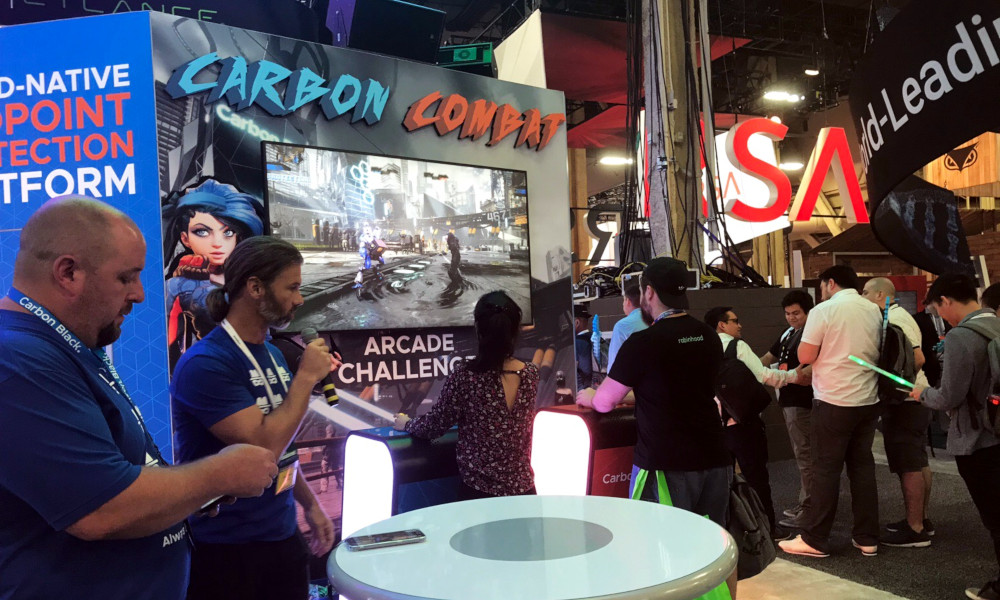
The Black Hat USA vendor floor, where Carbon Black even had its own Mortal Kombat parody arcade game

After taking some time to acclimatise, however, I had a much better time. I spoke to a few companies about products and services relevant to my work, got some hands-on time with some solutions I was curious about, and gathered so much swag that I almost couldn’t fit it all in my suitcase for the flight home. Granted, much of it was ill-fitting t-shirts that I’ll only ever wear to bed, but I also got a signed copy of Penetration Testing by Georgia Wiedman, which was a much more useful and valuable item than I was expecting to find.

Black Hat also gave me my first taste of the social side of Hacker Summer Camp. I went to a couple of vendor events in the evenings, and while I maybe didn’t chat to as many people as I’d hoped to, I had a few free drinks, saw some cool stuff (the best was probably Demisto’s gin and jazz event), and got to hang out with my colleagues and do a little gambling on the way home. By the end, I was ready for Defcon to kick things up a notch…

This is post two of three on my recent trip to Las Vegas. Stay tuned next week for the thrilling conclusion, which will cover my time at the Defcon hacking conference.

Las Vegas, Nevada, USA

I’m home, I’ve shaken the jetlag, and I finally feel like I’ve recovered from the sensory overload that is Las Vegas. So as promised, here’s the first of three posts about my experiences in the USA…

Las Vegas is a lot. Too much, probably. You want desert but your main course is about twice as big as the ones at home so you have no space left. You want to go to bed, but the walk back to your hotel takes you through three different casinos. And even once you reach your resort, you have to navigate your way through endless clusters of slot machines with their blinking lights and happy jingles to reach your room. Simply put, the place is exhausting, and after a week I couldn’t wait to get away and back to my own space.

At its best, Vegas is a unique experience. Where else am I going to have a cocktail served to me by a robot or spend a night wandering between casinos, gambling a little at each? Somewhere in the middle, Vegas is a sweltering, impassable sea of tourists not unlike the parts of London I deliberately avoid. And at its worst, Vegas feels almost sinister – never more so than when you notice the small details and tactics that help the place to maintain its Disneyland-like facade and convince people to part with their cash.

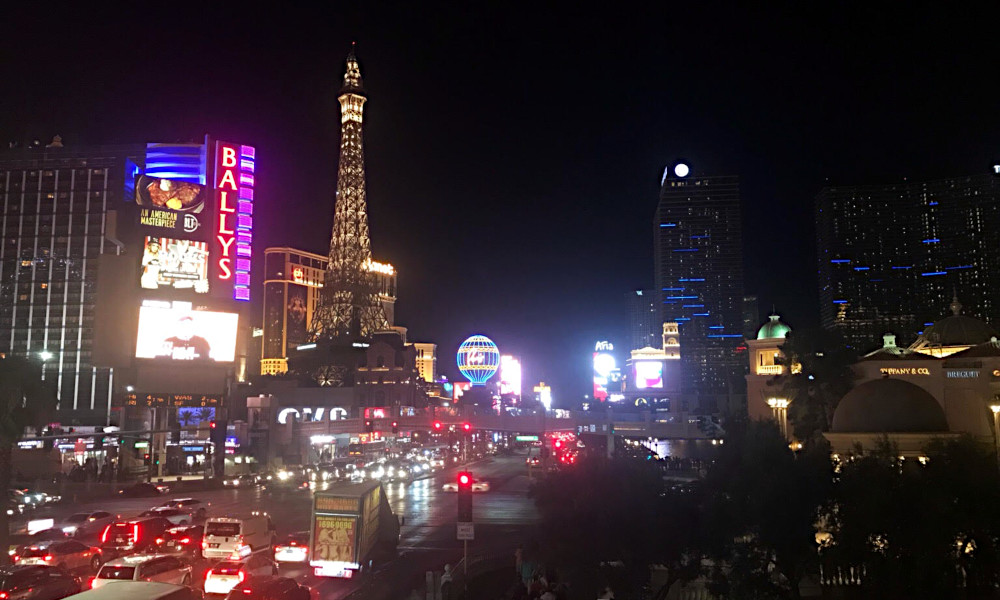
A view of the Strip (no post-edits here – it really is that bright)

On balance, I’m glad I had the opportunity to visit Las Vegas. It’s certainly somewhere to say that you’ve been, and I picked up a few stories that I’m sure I’ll tell anyone who’s interested for a few years to come. But unless I decide to go back to Defcon (more on that in a future post), I think it’s definitely a one-time thing. I’m not sure I could take another week dodging the crowds and having my attention pulled in all directions 24/7.

Don’t worry, though, Americans – I’ll be back. I know the Strip isn’t representative of your country, and even then, one of the positives I can take from my time in Nevada is that all the locals I spoke to were very polite and friendly. But perhaps the biggest positive from my trip is that I managed to achieve something that few people do in Sin City: I walked away from the Las Vegas casinos’ slot machines with a $10 profit in my pocket.

This is post one of three on my recent trip to Las Vegas. The next one will cover the Black Hat USA conference, and the final entry will be on the hacker get-together Defcon.

Hacker Summer Camp 2019

It’s time for something a bit different on my fledgling little blog, as soon I’ll be heading out to Las Vegas for Black Hat USA 2019 and Defcon 27 – two events that together have become known as Hacker Summer Camp. I’m super excited – I’ve never been to an event with anywhere near so many hackers and cyber security people in one place!

The venue is set to be just as interesting as the conferences. The two events will occupy no fewer than four hotels spanning the length of the Strip, giving me plenty of opportunity to explore Vegas between talks and meetings. I’ve never even been to the United States before, so I feel like I have a lot to see (feel free to leave tips in the comments).

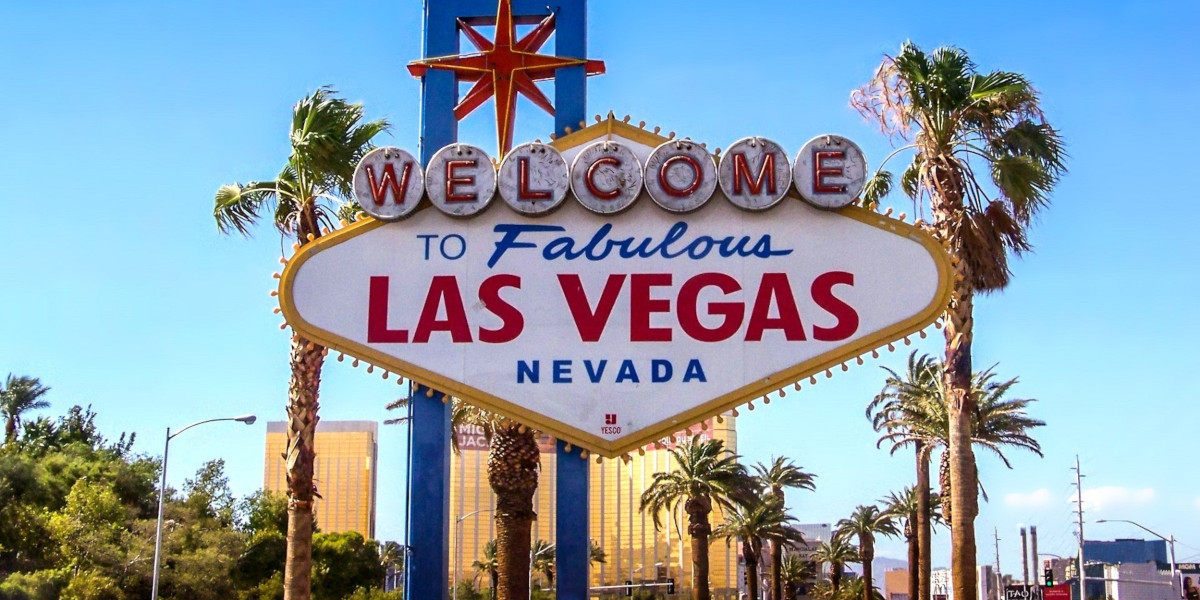
Probably the Vegas equivalent of a stock image of the London Eye or Parliament, but YOLO

To cover Hacker Summer Camp, I’m planning on writing three blog posts: one on my general impressions of Las Vegas, one on the corporate-focused Black Hat USA, and one on the hacking Wild West that is Defcon. I imagine there’ll be a lot to squeeze in, so they might be slightly longer than usual, and they may go up while I’m in the States or when I get back, depending on free time and the level of connectivity I have out there.

I realise there’s also a possibility that you’re reading this after I handed you a card at one of the events. If so, welcome! Please go ahead and subscribe to the blog, leave a comment below to say hello, and follow me on Instagram and Twitter if you have them. I’d love to build a little network to discuss cyber security and share cool techy stuff!

The Great Hack

As part of my effort to keep my finger on the pulse, I settled in on this rainy Saturday night to watch The Great Hack – Netflix’s new documentary about Facebook and the Cambridge Analytica scandal concerning the use of user data in political campaigns. It had reviewed well and the streaming service has a track record for producing decent original content, so I was surprised when two hours later I was left slightly disappointed.

The production was slick and the narrative was there – this would be a fair introduction if you were unaware of the scandal – but there were a few too many empty cliches about how “we are the product” and “data is now more valuable than oil”. I felt like I learnt very little new information about what happened and was instead watching a series of people who were involved to varying degrees attempting to either make or clear their names.

The Great Hack’s issues go beyond the fact that there was no hacking involved

Of particular concern was the way it portrayed former Cambridge Analytica director Brittany Kaiser as a reformed heroine when her actions at any point were angled towards whatever was profitable to her. It was profitable to work with the Obama campaign and it was profitable to work for Cambridge Analytica and become a gun-toting Republican.

In fact, she only seemed to turn against data-driven political campaigning once it became apparent that a career as a privacy advocate might be more fruitful. And at one point in the film when it looks like things might turn against her in that arena she heads straight for the airport to leave the United States, leaving her belongings behind at a hotel. Despite behaviour like this, the documentary still seems to take everything she says at face value.

I felt like The Great Hack could have been a lot more and asked many more interesting questions than it did, but maybe I was expecting too much because I work in technology and followed the story of the Cambridge Analytica scandal as it broke. If the film serves as a gateway for the unaware to learn about the risks that come with big data then that’s a good thing, but there’s still a lot of ground for a deeper-diving documentary to cover.