Def Con 27

This is the third and final part of my series on my trip to Hacker Summer Camp 2019 in Las Vegas. Follow the links to read about my thoughts on the Strip and my time at Black Hat USA.

Where to start…? Def Con 27 was amazing – perhaps even a life-changing experience. The annual hacker conference-come-party took all of the cool things I normally only find in weird places on the internet and brought them together in the real world in a selection of themed rooms spread throughout four Las Vegas hotels. There was so much going on that it was hard to choose what to do. I ended up spending roughly half my time exploring and the other half listening to talks, either in the villages or on DCTV in my hotel room.

On the exploration side, my favourite places were the Blue Team Village (mainly because it was full of “my people” and the most closely related to my work) and the Packet Hacking Village. The latter is home to the famous Wall of Sheep, which displays the usernames and passwords of less security-conscious attendees plucked from the airwaves, and though I didn’t have a laptop with me to get too technical, spending time observing and thinking about the possibilities has inspired me to brush up on my networking knowledge.

You’ll have to make do with my programme and badge, as photos of attendees are frowned upon

On the talks side, some of the most interesting sessions involved evading increasingly popular endpoint detection and response tools (either with some sneaky dynamically loaded code on Linux or with some cleverly crafted UEFI variables) and repurposing existing malware for other uses (which increases the chance your attack will be attributed to its nation state developers if discovered). And the Social Engineering village hosted some nice non-technical talks on subjects like OSINT and impostor syndrome, too.

Add to all of this the social element of Def Con, including arcade parties, hacker Jeopardy, and #BadgeLife – see my Instagram account to check out my small haul – and you have a memorable weekend that’s given me the energy for my next few months of coding and experimentation. I said before that I can’t really see myself returning to Las Vegas in future, but if I ever do, it’ll definitely be to go back to Def Con.

Hacker Summer Camp 2019

It’s time for something a bit different on my fledgling little blog, as soon I’ll be heading out to Las Vegas for Black Hat USA 2019 and Defcon 27 – two events that together have become known as Hacker Summer Camp. I’m super excited – I’ve never been to an event with anywhere near so many hackers and cyber security people in one place!

The venue is set to be just as interesting as the conferences. The two events will occupy no fewer than four hotels spanning the length of the Strip, giving me plenty of opportunity to explore Vegas between talks and meetings. I’ve never even been to the United States before, so I feel like I have a lot to see (feel free to leave tips in the comments).

Probably the Vegas equivalent of a stock image of the London Eye or Parliament, but YOLO

To cover Hacker Summer Camp, I’m planning on writing three blog posts: one on my general impressions of Las Vegas, one on the corporate-focused Black Hat USA, and one on the hacking Wild West that is Defcon. I imagine there’ll be a lot to squeeze in, so they might be slightly longer than usual, and they may go up while I’m in the States or when I get back, depending on free time and the level of connectivity I have out there.

I realise there’s also a possibility that you’re reading this after I handed you a card at one of the events. If so, welcome! Please go ahead and subscribe to the blog, leave a comment below to say hello, and follow me on Instagram and Twitter if you have them. I’d love to build a little network to discuss cyber security and share cool techy stuff!

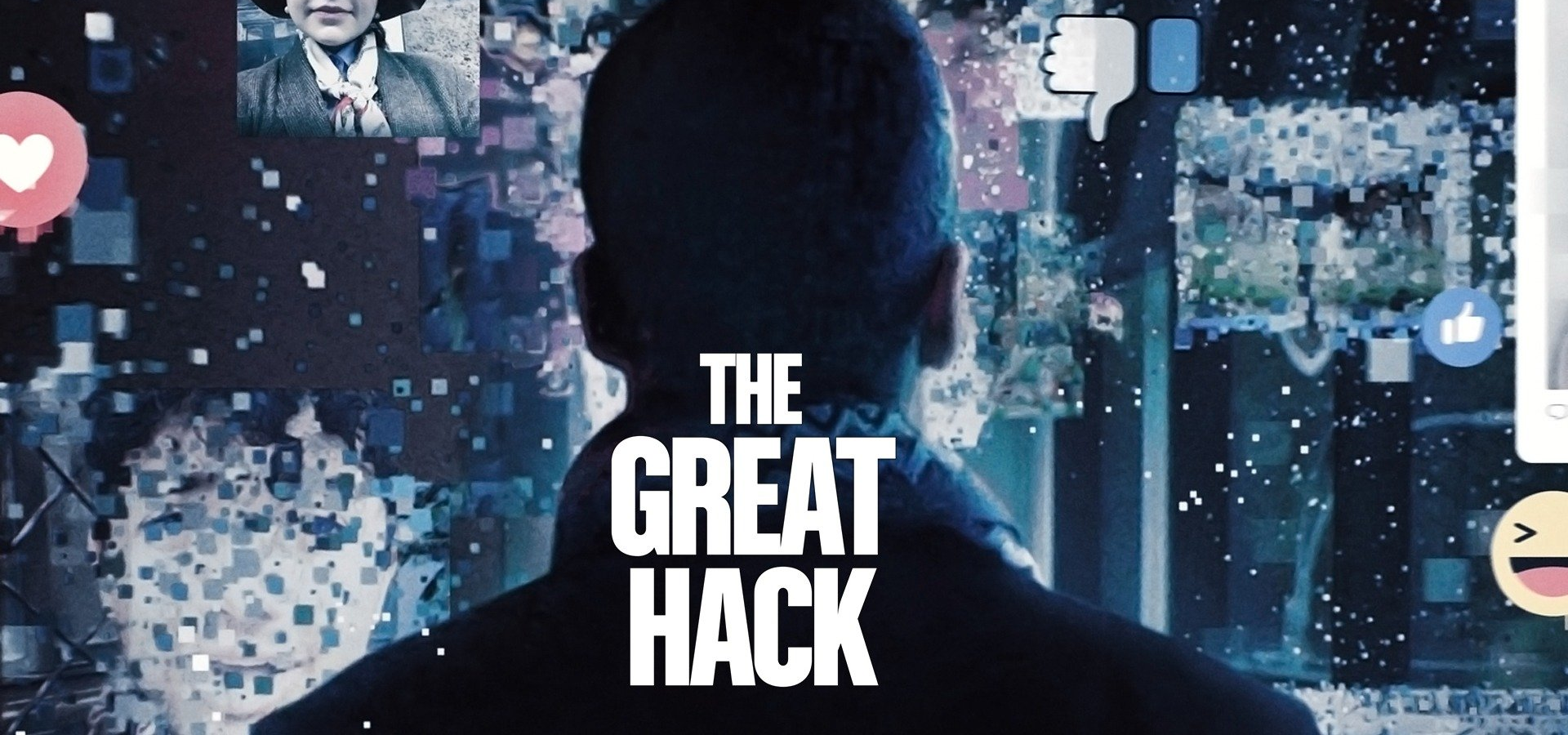
The Great Hack

As part of my effort to keep my finger on the pulse, I settled in on this rainy Saturday night to watch The Great Hack – Netflix’s new documentary about Facebook and the Cambridge Analytica scandal concerning the use of user data in political campaigns. It had reviewed well and the streaming service has a track record for producing decent original content, so I was surprised when two hours later I was left slightly disappointed.

The production was slick and the narrative was there – this would be a fair introduction if you were unaware of the scandal – but there were a few too many empty cliches about how “we are the product” and “data is now more valuable than oil”. I felt like I learnt very little new information about what happened and was instead watching a series of people who were involved to varying degrees attempting to either make or clear their names.

The Great Hack’s issues go beyond the fact that there was no hacking involved

Of particular concern was the way it portrayed former Cambridge Analytica director Brittany Kaiser as a reformed heroine when her actions at any point were angled towards whatever was profitable to her. It was profitable to work with the Obama campaign and it was profitable to work for Cambridge Analytica and become a gun-toting Republican.

In fact, she only seemed to turn against data-driven political campaigning once it became apparent that a career as a privacy advocate might be more fruitful. And at one point in the film when it looks like things might turn against her in that arena she heads straight for the airport to leave the United States, leaving her belongings behind at a hotel. Despite behaviour like this, the documentary still seems to take everything she says at face value.

I felt like The Great Hack could have been a lot more and asked many more interesting questions than it did, but maybe I was expecting too much because I work in technology and followed the story of the Cambridge Analytica scandal as it broke. If the film serves as a gateway for the unaware to learn about the risks that come with big data then that’s a good thing, but there’s still a lot of ground for a deeper-diving documentary to cover.

Watch Dogs: Legion E3 reveal

The first Watch Dogs was dull and suffered the consequences of going back on its promises. The second Watch Dogs was a lot more fun and one of the underrated greats of this generation. There were a lot of rumours around the third title – a London setting, multiple player characters – but what would Ubisoft actually deliver?

E3 2019 gave us the answers, and while it would be easy to focus on the bad (the dodgy English accents, the abundance of gunplay in a game about hacking, the non-existent Trafalgar Square Tube station), the demo gameplay gripped me as much as a technology enthusiast as it did as a gamer. Some of the systems at play were simply spectacular.

At least the future Piccadilly Circus has fewer tourists

Watch Dogs: Legion, as it turned out to be called, has no main character. Your DedSec squad can be assembled from any of the inhabitants of near-future, cyberpunk London, all of whom have their own lives, their own opinions on the hacking group, and go about their day-to-day business in the city. If what was said is accurate, it’s a huge acievement.

The mind boggles when you think of all of the character generation systems, writing, voice acting, cut scene development, and background processes that went into this. And by coupling such an exciting feature with an neon-augmented open-world London, Ubisoft have guaranteed that they will have my attention until the game’s release next March.